Property managers often ask us one question when they take over a tower: should we keep using the swing stage the last vendor brought, or switch to rope access? The honest answer is that it depends on the building, and the wrong choice can add weeks of work and thousands of dollars to every cleaning cycle. Here is how we make the decision on real Detroit buildings.
What each method actually is
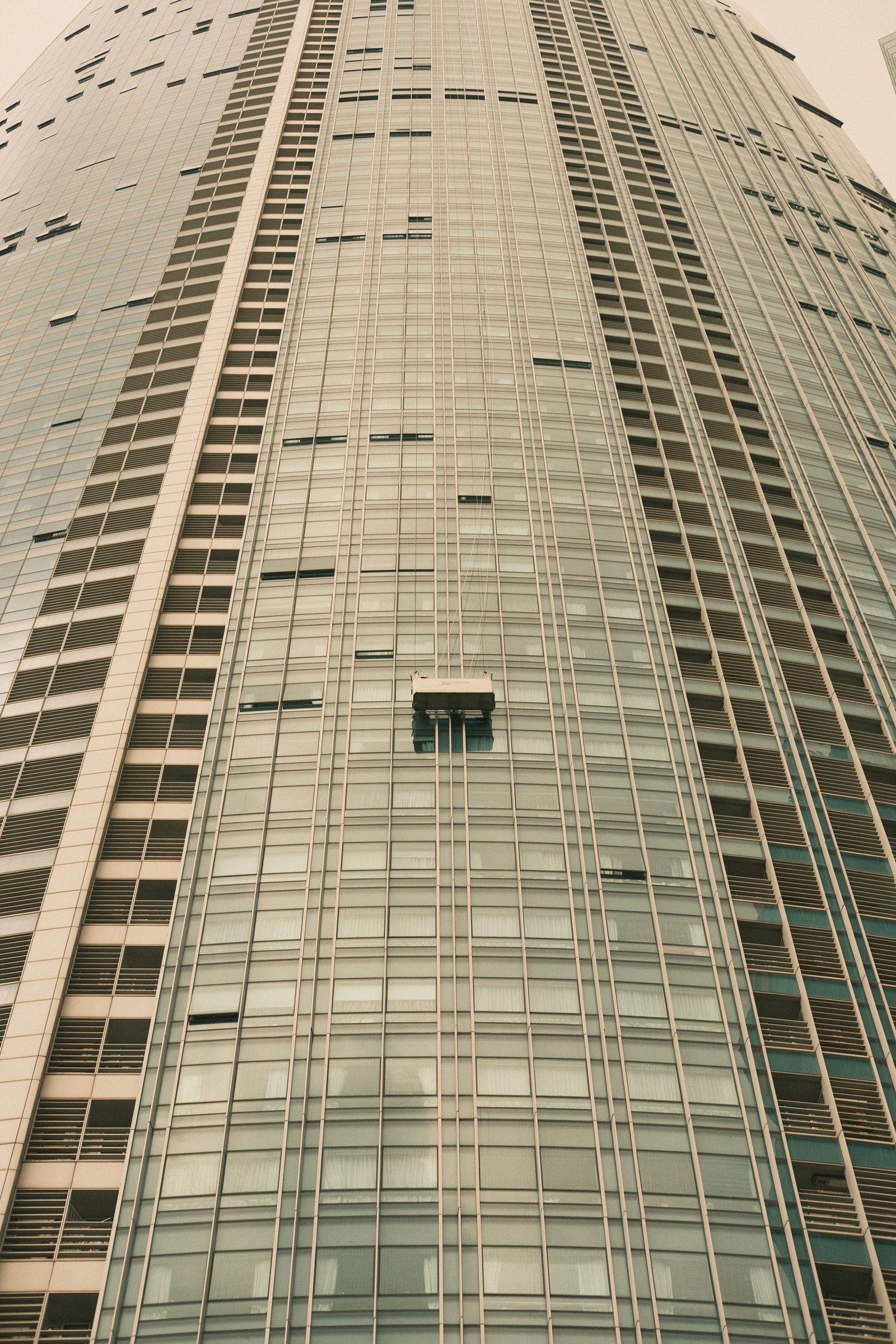
Rope access puts individual technicians on two independent ropes, a working line and a safety line, each tied to separate certified roof anchors. The technician descends in a seat harness, cleaning as they go, and moves sideways between drops. Swing stages, also called suspended platforms, are aluminum decks hung from roof outriggers or permanent davits and raised or lowered with electric hoists. Two operators ride the stage together with their tools and materials.
Both methods are governed in the United States by OSHA and by the ANSI/IWCA I-14.1 window cleaning safety standard. Both are safe when planned properly. The differences are in speed, footprint and what else you need done on the facade.
When rope access wins
Rope access is usually faster to rig. A trained crew can set a drop in under an hour, clean it, and move to the next one. There is no heavy equipment on the roof and nothing to crane up. That speed matters on buildings with many short drops, setbacks, curved glass or architectural fins where a rigid stage cannot follow the facade.
- Irregular facades with setbacks, balconies or sloped glass
- Buildings with limited roof space or no davit system
- Sites where closing a sidewalk or street is expensive or impossible
- Projects where total cost per cycle is the main priority
On a 38-story riverfront tower we took over last year, switching three elevations from stage to rope cut the cycle from 19 working days to 11 and removed the need for any sidewalk closures. The owner saved about 22 percent annually without changing frequency.
When a swing stage wins
Stages shine on long, flat elevations where the platform can cover a wide section of glass in a single pass. Because a stage carries hundreds of pounds of materials, it is also the better choice when window cleaning is combined with caulking, gasket replacement, painting or glass repair. Two workers side by side can handle tasks that would be awkward for a technician on a rope.
- Long uniform curtain wall elevations
- Combined cleaning and sealant or glazing repairs
- Buildings with permanent davits already certified for stage use
- Work that needs heavy tools or replacement materials at height
Anchors decide more than people expect
Neither method can start until roof anchors are verified. Michigan buildings built before the 1990s often have tie-backs that were never load tested, or davits whose certification lapsed years ago. We inspect every anchor during the site survey and coordinate third-party testing with a licensed engineer where needed. On many buildings that testing is the single largest one-time cost of starting a program, so budget for it early.
The cheapest access method is the one your roof is already certified for. The second cheapest is the one that avoids closing the sidewalk.
Weather and scheduling
Suspended stages act like sails, so we stop stage work at sustained winds of 20 mph. Rope technicians present less surface area and can usually work up to 25 mph. In a Detroit spring, that five mph difference can mean several extra working days. On the other hand, stages provide a stable platform for longer tasks in cold weather when technicians need to change gloves or tools often.
How we recommend a method
Every commercial walkthrough ends with a written access plan that compares methods elevation by elevation. It lists setup time, crew size, expected days, anchor status, ground protection needs and a per-cycle price. Many buildings end up using a mix: rope access on complex elevations and a stage on the long flat side where sealant work is due. If you want that comparison for your building, request a free estimate and our site lead will walk the roof with your engineer.